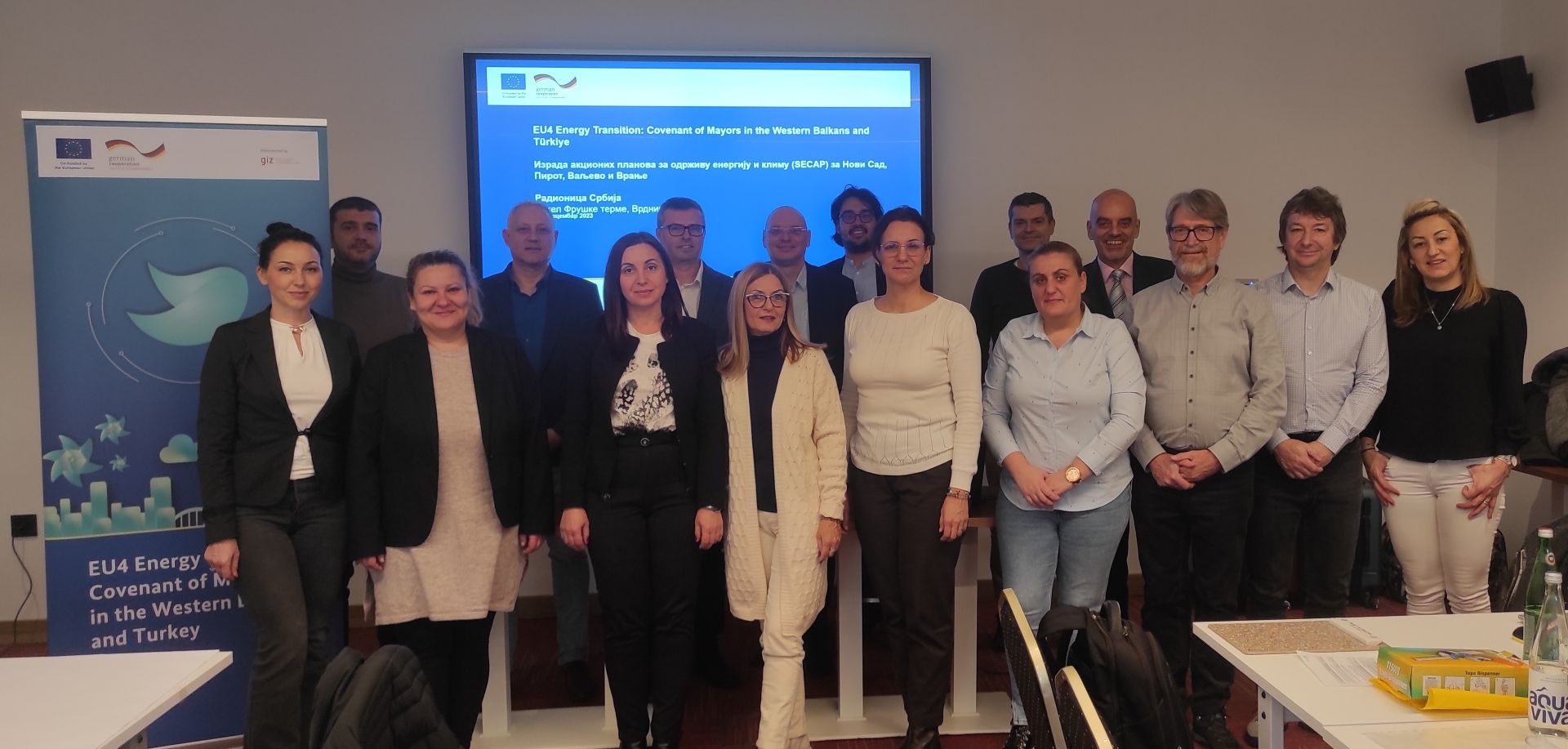
SECAP Workshop Serbia
On 5 December 2023, the SECAP Workshop – Strategy and Definition of Measures brought municipal working groups and experts together at Hotel Fruške terme in Vrdnik, Serbia.
The workshop supported Vranje, Valjevo, Novi Sad and Pirot in developing their Sustainable Energy and Climate Action Plans (SECAPs). Its purpose was to connect existing assessments and locally identified priorities with clearly structured measures for reducing emissions and strengthening climate resilience.
As Country Expert Team Leader for Serbia, my contribution centred on coordinating expert support, connecting the workshop with the wider implementation process and guiding the next steps with participating cities.
Connecting strategy with municipal priorities
My role included providing an overview of progress and explaining how the workshop activities fitted into the overall SECAP development process.
The programme addressed the strategic elements of each plan: its vision, commitments, organisational arrangements and resources. Municipal coordinators were also invited to present findings from their Baseline Emission Inventories (BEIs) and Risk and Vulnerability Assessments (RVAs), with expert comments helping connect those findings to proposed actions.
This provided a basis for examining whether priority measures responded to each city’s main emissions sources and climate vulnerabilities.
Supporting the definition of practical measures
Working groups received guidance on the Covenant of Mayors action template, including how to describe individual measures and identify information still needed to complete them.
The workshop combined presentations with structured discussions at dedicated municipal working stations. Local experts supported the review of proposed mitigation and adaptation actions, suggesting clarifications, adjustments and additional options for consideration.
The supporting materials illustrated measures such as building energy efficiency, renewable energy, sustainable mobility, flood resilience, urban cooling and water conservation. They also included approaches to energy poverty, helping broaden consideration of the social dimensions of local climate action.
These examples served as inputs for discussion and assessment of local suitability.
Coordinating follow-up and delivery
An important part of my responsibility was to connect the workshop work with the tasks that would follow. This included outlining how experts would continue supporting municipal teams, planning further meetings and clarifying deadlines for outstanding inputs.
The process required working groups to identify available information, record gaps and determine how missing data could be obtained.
My focus was on maintaining a consistent approach across the four cities while supporting locally relevant choices. The workshop advanced the preparation of measures that could be incorporated into each SECAP and developed further through continued cooperation between municipal teams and experts.