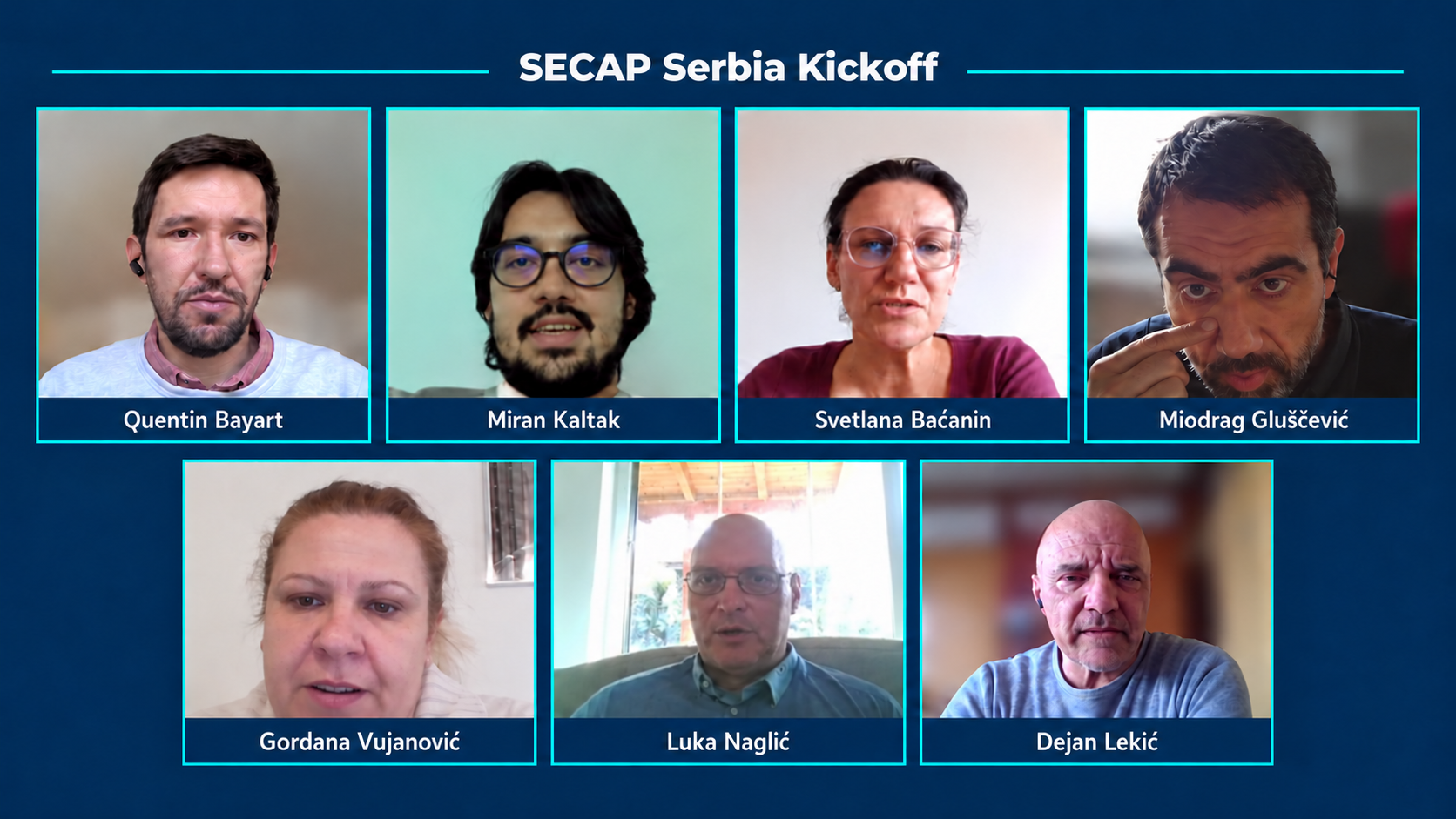
SECAP Serbia Kick-off
The SECAP Serbia kick-off meeting on 8 November 2023 established the operational framework for supporting Vranje, Valjevo, Novi Sad and Pirot in developing their Sustainable Energy and Climate Action Plans (SECAPs).
As Country Expert Team Leader for Serbia, my role was to coordinate country-level delivery, connect the expert team with participating local governments and maintain the quality and consistency of the work within the GIZ-supported assignment.
Leading the Serbian expert team
My responsibilities included overseeing implementation of the contracted activities in Serbia, managing the local expert pool and reporting progress to the overall Team Leader. I also served as a focal point between the contractor and GIZ country coordination and represented the contractor in cooperation with the supported cities.
The Serbian expert team included Gordana Vujanović, Luka Naglić and Dejan Lekić. Their work would support municipal working groups through assessment review, work planning, selection and formulation of mitigation and adaptation measures, and preparation of SECAP documents.
My leadership role focused on coordinating these contributions, monitoring progress and ensuring that deliverables responded to the agreed requirements and local needs.
Working with four cities
The assignment would involve close cooperation with municipal counterparts and working groups. Initial contacts included:
Vranje: Danijela Bandović, with preparations also addressing the formal documentation for the SECAP working group.
Valjevo: Miroslav Timić and Viktor Micić.
Novi Sad: Bojana Pađen, Andrijana Čapko and Mladen Konjović.
Pirot: Bojan Ivković and Milica Golubović.
These connections provided the basis for organising expert support, exchanging information and involving the relevant municipal departments in plan development.
Connecting assessments with local action
The work programme followed four linked stages: inception, formulation of mitigation actions, formulation of adaptation actions and preparation of the individual SECAPs.
Initial work would review existing emissions and climate risk assessments and establish a work plan for each city. Subsequent activities would combine technical analysis with municipal workshops to identify suitable measures and prepare supporting technical sheets.
The final stage would integrate the strategy, assessment findings, mitigation measures and adaptation measures into draft plans, incorporate municipal feedback and present the completed SECAPs.
For me, the central task was to keep this process coordinated across four cities while allowing each plan to reflect its local circumstances. Clear responsibilities, regular communication and consistent quality review would underpin that approach.