Blue Economy in the South Adriatic Region: Facilitating the SKILLS Dialogue
How can the South Adriatic region connect marine research, education and public policy to build the workforce its blue economy needs?
This question framed the SKILLS high-level panel session, “Blue Economy in the South Adriatic Region,” which I facilitated on 2 October 2024 during AdriBioPro2024 in Kotor, Montenegro. Held at the “Nikola Đurković” Cultural Centre, the session brought together research and institutional perspectives from Montenegro, Albania and Italy.
Guiding the discussion from shared challenges to practical priorities
As facilitator, I opened the session by setting out the relationship between research, education and regional cooperation. I introduced the SKILLS project as a framework for connecting these areas and addressing gaps between educational provision and the needs of blue economy sectors.
My role was to guide the exchange through successive rounds of contributions, connect the speakers’ perspectives, bring audience questions into the discussion and draw together the main messages. The conversation moved between regional ambitions and practical concerns: relevant qualifications, applied research, employment opportunities and cooperation across borders.
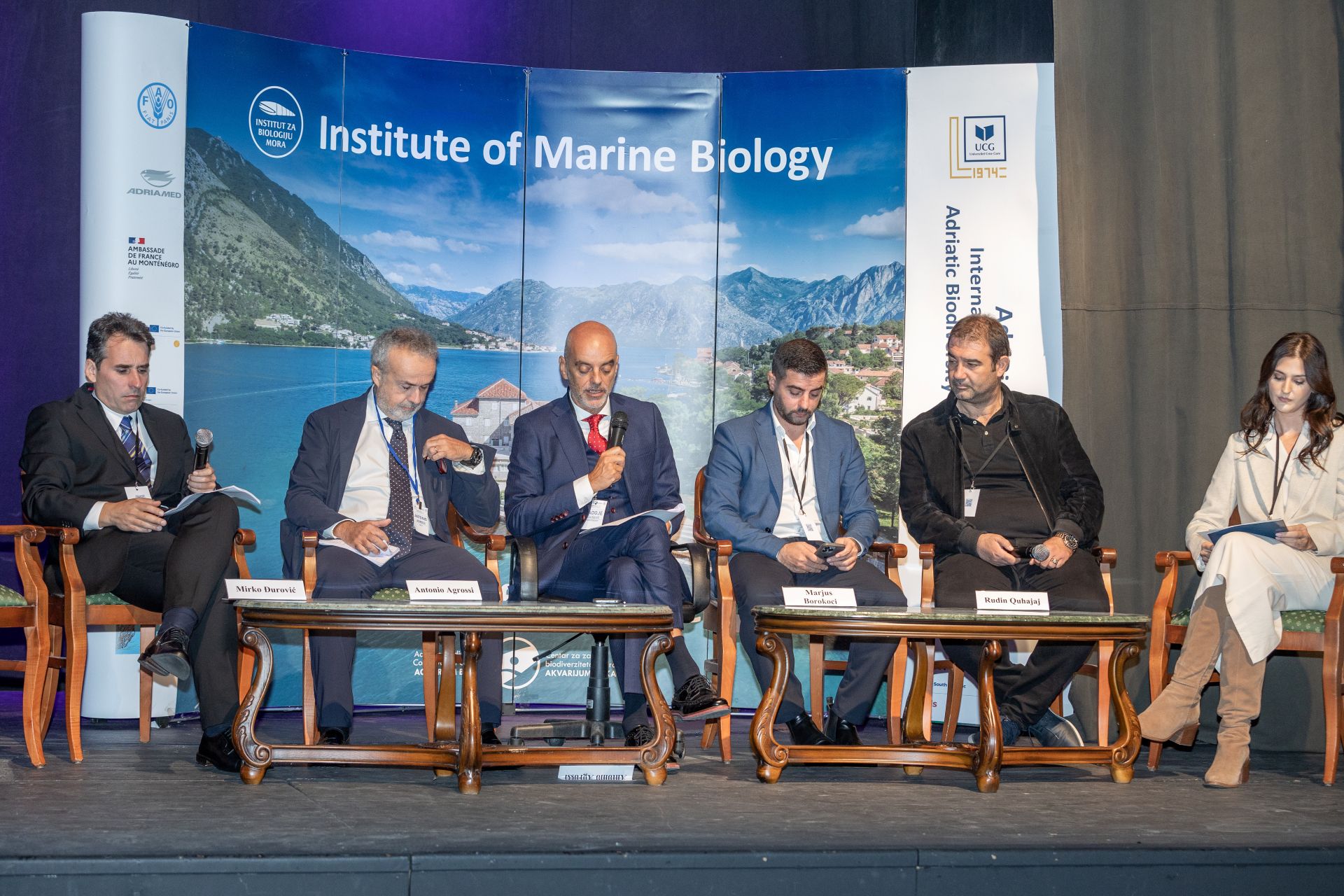
Photo: Facilitating an exchange on research, skills and regional cooperation for the South Adriatic blue economy.
Connecting research, training and employment
Dr Mirko Đurović, Director of the Institute of Marine Biology, University of Montenegro, addressed the need to align research with industry challenges while supporting biodiversity conservation and sustainable fisheries. His contribution connected applied science with the planned SKILLS Blue Qualification Framework and Blue Economy Training Centre.
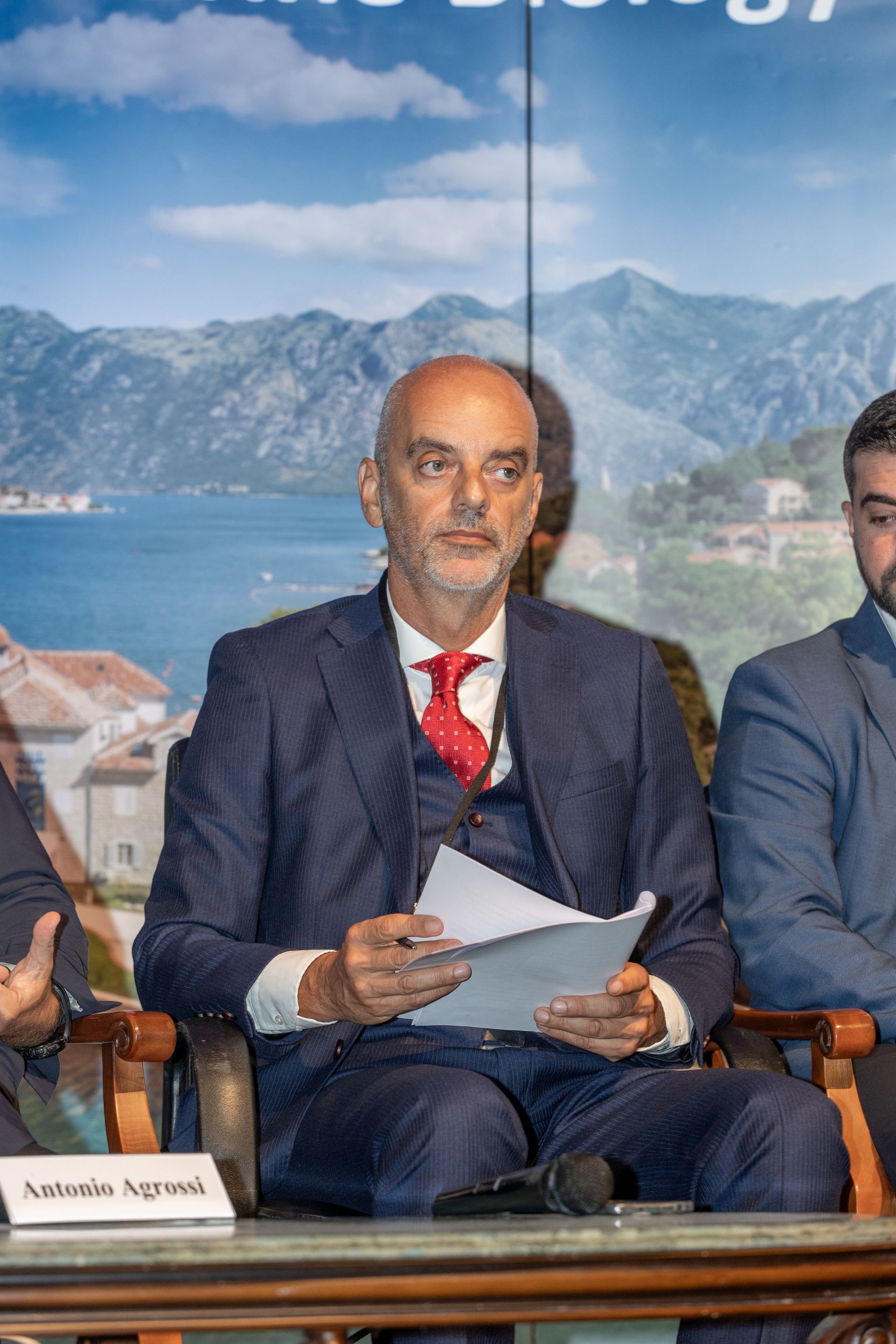
Antonio Agrosì, representing the Interreg South Adriatic Joint Secretariat, explored how EU-funded cooperation can strengthen employment and skills. He highlighted digital and green competencies and the planned Blue Economy Digital Platform as a means of supporting training, networking and market access.
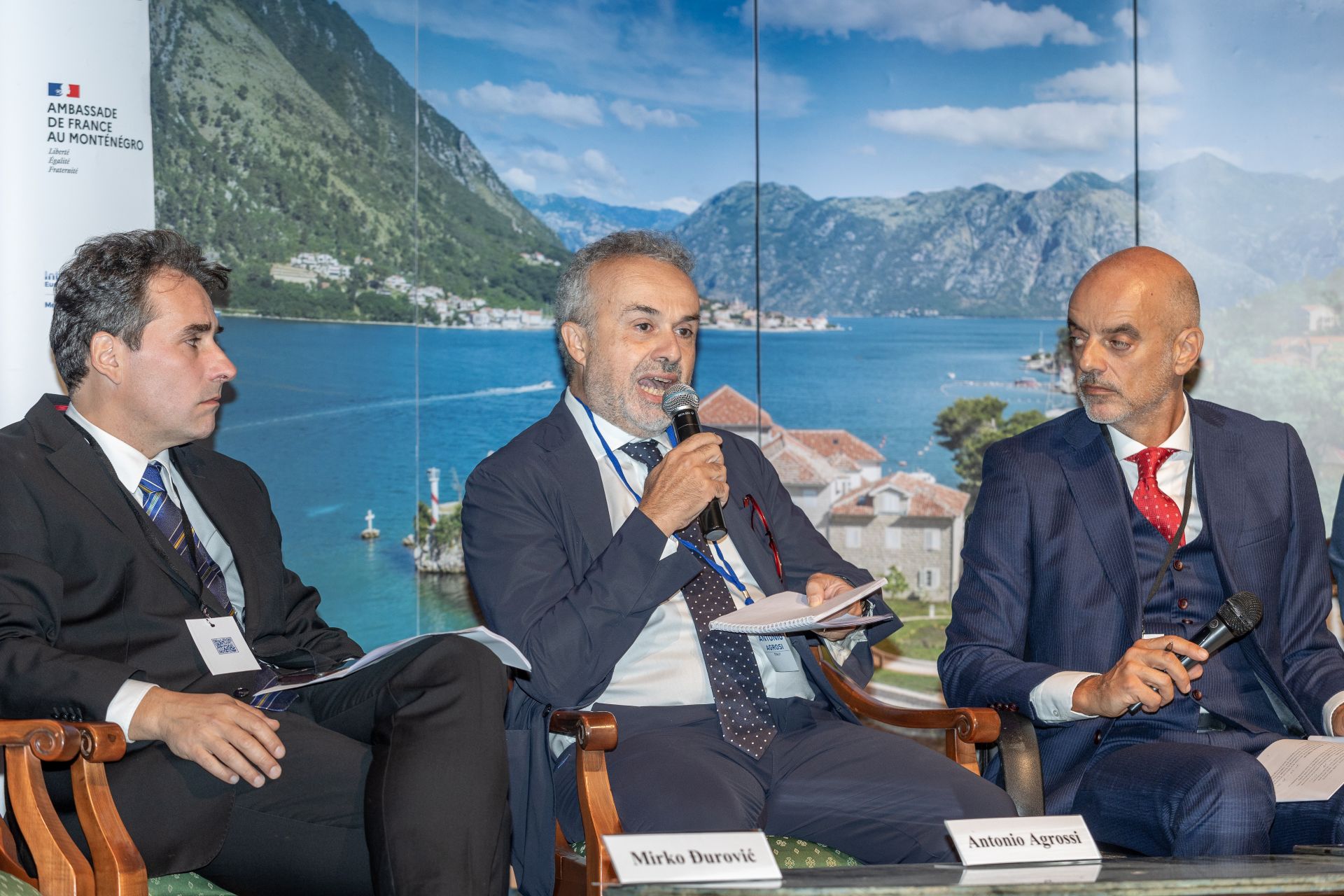
Photo: Antonio Agrosì addressing the role of EU-funded cooperation in developing blue economy skills and employment. From Left: Dr Mirko Đurović, Antonio Agrosi, Dr Radoje Laušević.
The education perspective was developed further by Francesco Carretta of Puglia Region, who discussed specialised training, retaining young talent and cooperation between education and labour market institutions.
Together, these contributions raised a practical issue for the discussion: how can research findings and regional investment translate into learning opportunities and qualifications that employers and young people can use?
Bringing national priorities into a regional conversation
Marjus Borokoci, representing Albania’s State Agency for Strategic Programming and Aid Coordination, addressed strategic planning, policy alignment and emerging opportunities in aquaculture, marine biotechnology and renewable energy.
Aferdita Vuljaj, from Montenegro’s Ministry of Economic Development, emphasised policy harmonisation, joint investment and the potential of cross-border clusters. Rudin Qehajaj, from Albania’s Ministry of Agriculture and Rural Development, contributed examples concerning sustainable fisheries, marine tourism and aquaculture.
These perspectives connected national priorities with shared regional challenges. They also highlighted the importance of understanding the bottlenecks that prevent people from accessing the skills needed in growing marine sectors.
Dr Michael Chatziefstathiou, Coordinator of EUSAIR Pillar 1 “Blue Growth,” added the wider Adriatic–Ionian perspective, linking regional initiatives with cooperation on blue skills, sustainable tourism and marine innovation.
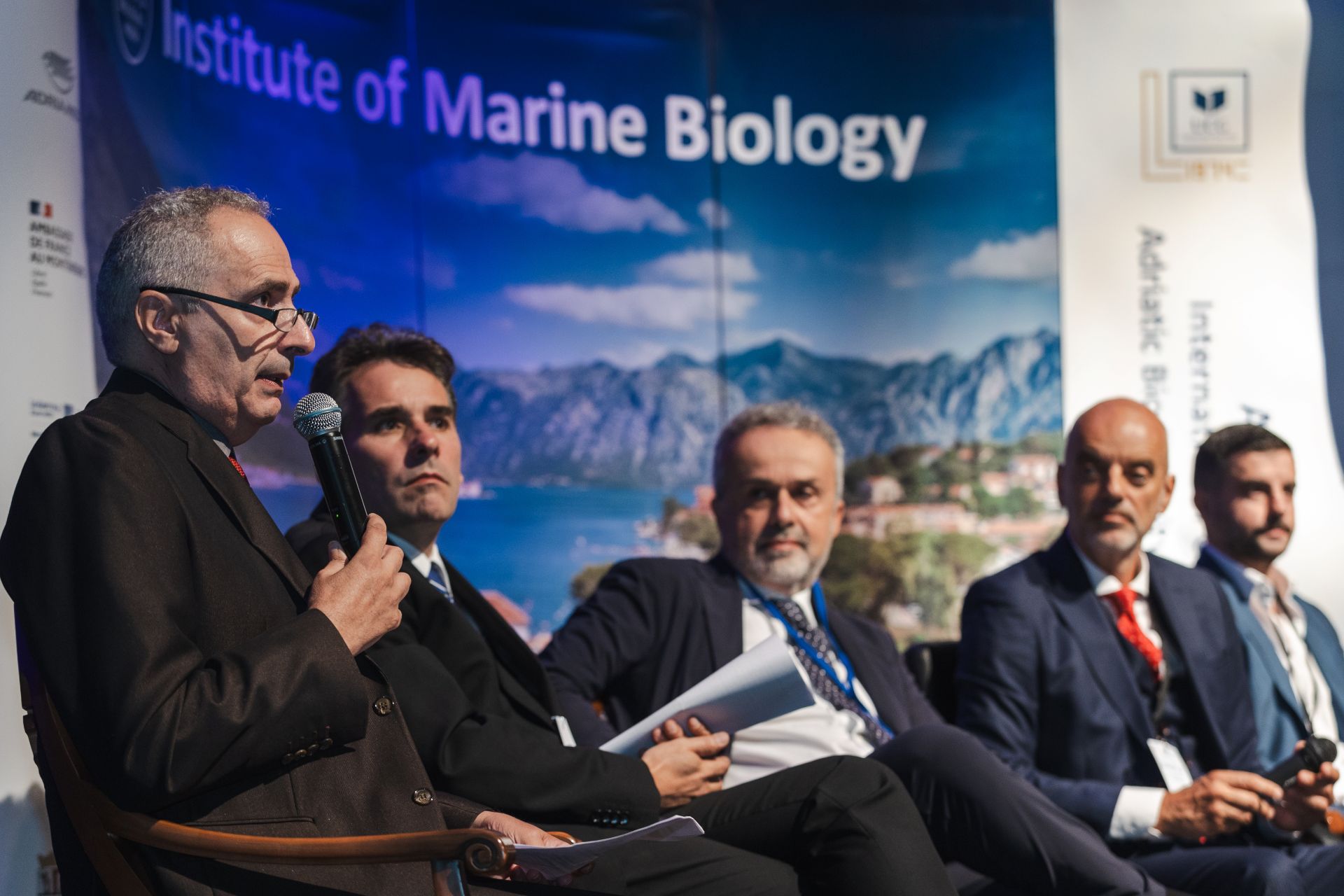
Photo: Michael Chatziefstathiou contributing the EUSAIR Blue Growth perspective to the panel discussion.
Drawing together the priorities for further cooperation
Audience questions brought additional attention to the relationship between academic research and industry, access to EU funding for smaller enterprises, and closer integration of blue economy strategies across Montenegro, Albania and Italy.
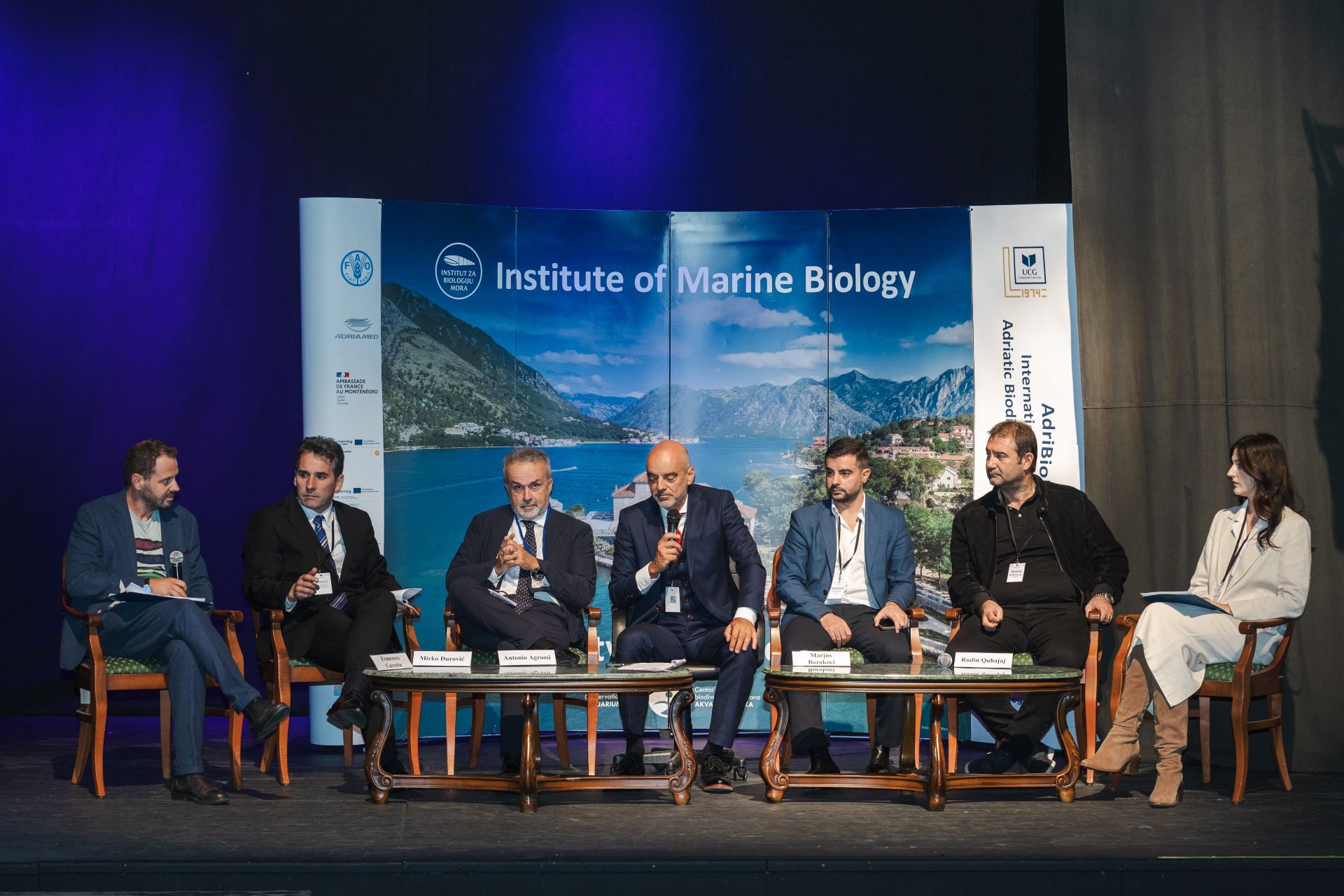
Photo: Panelists of the SKILLS high-level panel on the blue economy in the South Adriatic region. From left: Francesco Carretta, dr Mirko Đurović, Antonio Agrosì, dr Radoje Laušević, Marjus Borokoci, Rudin Qehajaj, Aferdita Vuljaj.
In closing the session, I highlighted the need to align research, education and policy so that innovation is supported by a skilled workforce. Stronger regional cooperation and investment are essential to addressing common constraints and extending successful initiatives.
For me, facilitating this panel meant connecting different institutional perspectives around a shared practical concern: how to equip people and organisations to develop the South Adriatic blue economy while safeguarding the marine resources on which it depends.
Cover photo: Radoje Laušević facilitating the SKILLS high-level panel at AdriBioPro2024, Kotor, 2 October 2024.
Related project: