Benefits of Ecotourism
How can tourism support local livelihoods while protecting the landscapes and heritage that attract visitors? The “Benefits of Ecotourism” workshop, held in Kotor on 3–4 July 2024, explored this question through presentations, discussions and visits to local tourism initiatives.
Organised by the Tourism Organisation of Kotor within TOUR — TOURists friends of the environment, the workshop brought together 48 participants. It combined exchanges among project partners from Italy, Albania and Montenegro with practical examples from Lovćen, Njeguši, Kotor and Perast.
Representing ASENVIROCON, I presented the BluePass mobile application as a tool for discovering Kotor’s ecotourism offer, contributing to the discussion on how digital information can connect visitors with natural and cultural attractions.
Connecting digital tools with local experiences
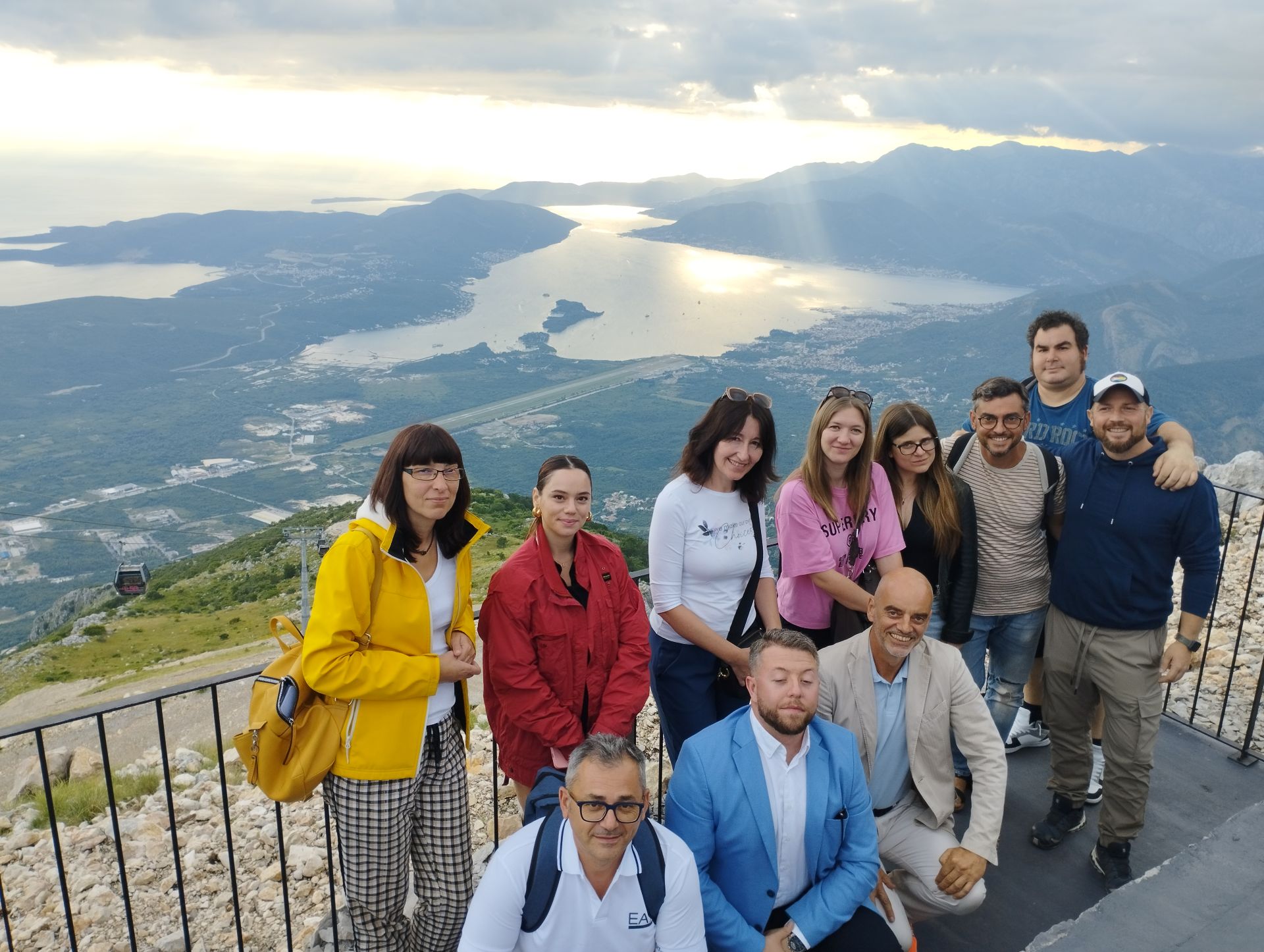
My presentation took place at the Kuk upper station of the Kotor Cable Car, alongside introductions to the cable car and hiking routes in Lovćen National Park.
I introduced BluePass as a way to help visitors discover and navigate attractions in the Kotor area. The setting connected the digital tool with the landscape it helps people explore, providing a practical context for discussing technology’s role in visitor information and ecotourism promotion.
The programme continued in Njeguši, where local food producers presented traditional products, including prosciutto and cheese. These exchanges illustrated how tourism can support local production and communicate culinary heritage through direct visitor experiences.
Understanding tourism’s benefits and pressures
The second day examined the relationship between tourism, cultural heritage and natural landscapes. A guided visit through Kotor’s Old Town provided context for discussions on conservation, economic benefits and the pressures associated with overtourism.
Project partners shared perspectives on sustainable tourism and integrated local development. A dedicated session on ecotourism explored its potential contribution to environmental conservation, cultural preservation and local economic activity.
These discussions emphasised the need to assess how tourism is managed and how its benefits reach local communities.
Exploring alternatives in the Bay of Kotor
At the Institute of Marine Biology and Aquarium Boka, participants encountered examples ranging from electric and hybrid boats to traditional wooden boat craftsmanship, slower-paced excursions and marine education.
The programme also included discussion of the draft TOUR Joint Action Plan and a visit to Perast, where tourism’s effects on natural and historical sites were considered.
My contribution through BluePass formed part of this wider exchange: exploring how visitor information, local knowledge and distinctive experiences can work together to support more responsible tourism choices.
Photo: TOUR project team members on Lovćen during the “Benefits of Ecotourism” workshop, Montenegro, July 2024.