LiRRIE Action Plan
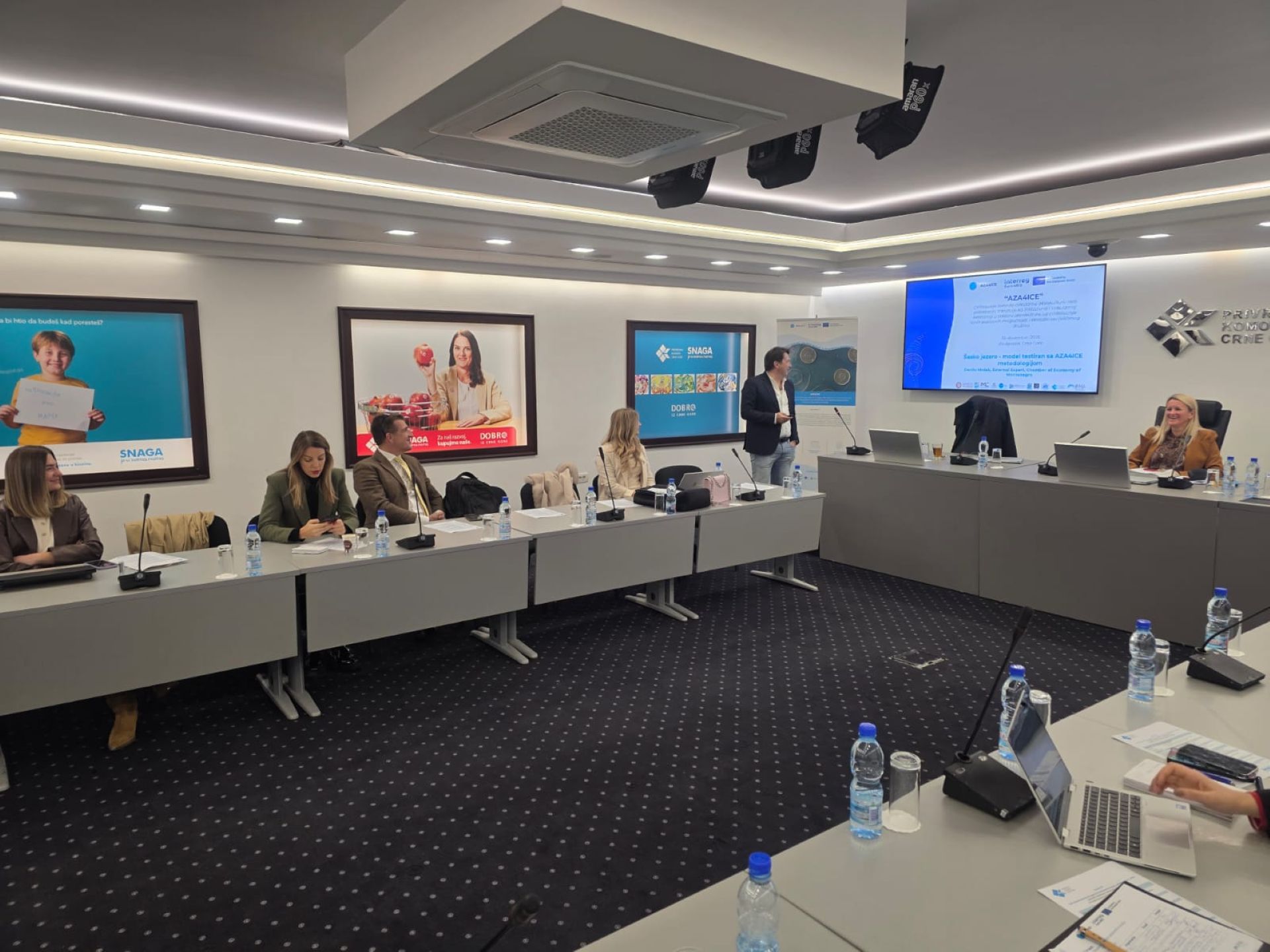
Turning circular aquaculture principles into locally relevant actions requires scientific evidence, practical knowledge and stakeholder involvement. These elements came together at the third Living Responsible Research and Innovation Ecosystem (LiRRIE) event, held on 15 December 2025 at the Chamber of Economy of Montenegro in Podgorica.
Within AZA4ICE — Allocated Zones for Circular Aquaculture to Trigger the Transition to an Inclusive Circular Economy, I serve as an Expert in Living Responsible Research and Innovation Ecosystems and Inclusive Circular Economy. At this event, I presented the first draft of the AZA4ICE Action Plan for Montenegro and facilitated discussions on the technical findings and proposed actions for Šasko Lake.
Presenting the draft Action Plan
My presentation outlined the plan’s structure, priority actions, stakeholder responsibilities, indicative timelines and implementation considerations. The draft had been circulated before the meeting to support informed discussion.
The proposed framework brought together six areas: a freshwater demonstration pilot using integrated multi-trophic aquaculture (IMTA); capacity building for local fishermen and small businesses; community-led circular practices; environmental monitoring; governance and coordination; and business support and funding.
The discussion connected these proposals with the Šasko Lake findings presented by Dr Danilo Mrdak and the common transnational strategy presented by Sandra Perić.
Facilitating stakeholder input
My facilitation focused on helping participants assess the findings, discuss implementation constraints and identify improvements to the draft plan. Open dialogue, Mentimeter exercises and targeted questionnaires provided complementary ways to collect views.
Capacity building emerged as the highest priority, followed by the demonstration pilot and community-based circular initiatives. Participants highlighted the need for practical training in aquaculture systems, licensing procedures, financial literacy and preparation of funding applications.
Stakeholders also supported testing an IMTA demonstration pilot, with most respondents making their support conditional on strict environmental protection measures. This provided clear guidance for further planning: demonstration activities must be supported by monitoring, safeguards and transparent communication.
Connecting priorities with implementation
Participants proposed accessible community actions such as waste separation, reusable fishing gear, clean-up activities and educational initiatives involving schools and local organisations.
The discussions also addressed responsibilities and financing. Stakeholders favoured strong involvement by local authorities and fishermen’s associations, supported by national fisheries institutions and scientific expertise. Additional suggestions included financial feasibility assessments, dialogue with potential investors and consideration of replication opportunities.
The feedback informed the second draft of Montenegro’s AZA4ICE Action Plan, providing a basis for further evaluation and adjustment.
For me, the main value of the LiRRIE process is making stakeholder participation consequential: ensuring that local knowledge, concerns and priorities shape the actions proposed for implementation.