Sustainable Future of Adriatic Fisheries
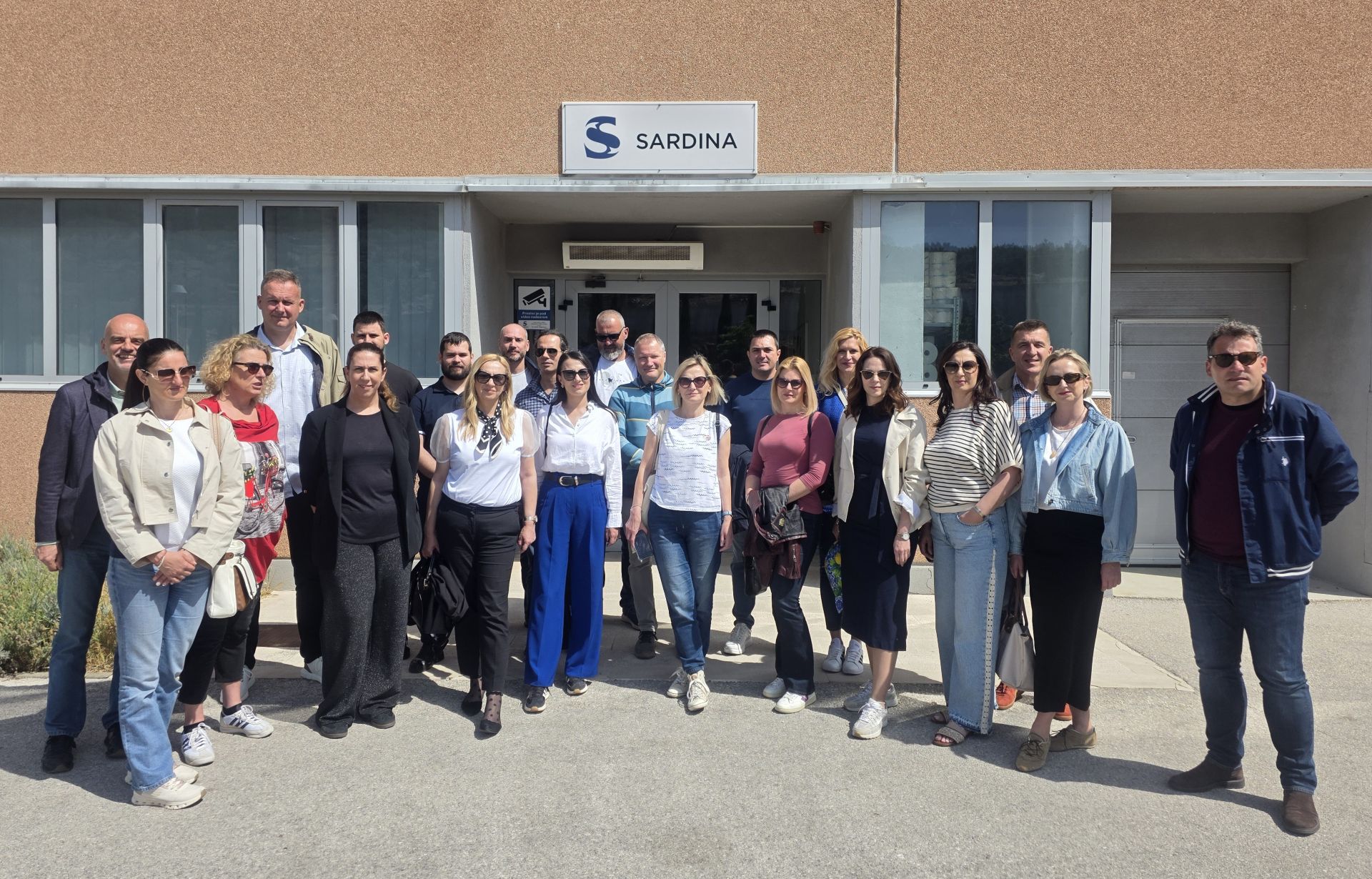
How can fisheries businesses build on their traditions while improving resource efficiency and competitiveness? A BLUECONNECT study visit to Sardina d.o.o. in Postira, Brač Island, on 14 May 2026, offered practical examples for stakeholders from Croatia, Bosnia and Herzegovina, and Montenegro.
As BLUECONNECT’s Blue Growth Collaboration Platform Expert, I facilitated exchanges among participants on how the practices presented during the visit could inspire similar approaches elsewhere in the Adriatic. My contribution focused on connecting the experience of an established seafood company with opportunities for regional learning and cooperation.
Learning from fisheries tradition and innovation
Sardina combines more than a century of fisheries experience with modern fish processing and mariculture operations. The visit covered production facilities, freezing chambers, quality control laboratories and processing lines for canned fish and fish pâté.
A central theme was the efficient use of raw materials. Company representatives explained how fish by-products are used to produce fish oil and fish meal, reducing waste and recovering value from materials beyond the main product lines.
Participants also learned about the company’s environmental management measures, including CO₂-based freezing technology, biomass heating, wastewater treatment, odour control and improvements in energy efficiency. These examples provided a basis for discussing how investment in production and environmental performance can support business development.
Facilitating exchange across the Adriatic
I facilitated stakeholder discussions on how successful practices from Brač could inform developments across the Adriatic region. Participants exchanged perspectives on innovation, sustainable fisheries management, seafood markets, export opportunities and potential cooperation.
The discussions considered how the approaches presented at Sardina might be adapted to different business capacities and local conditions. Resource efficiency, better use of by-products and environmental management emerged as relevant areas for further exchange.
The visit also created opportunities to strengthen connections with the Adriatic Blue Growth Cluster, including discussion of future networking activities and seafood market links with Montenegro.
For me, the value of the visit lay in connecting practical experience with regional dialogue. Seeing production processes firsthand gave stakeholders a shared basis for exploring what could be transferred, adapted or developed together to support more sustainable Adriatic fisheries.