Regulatory Frameworks in Aquaculture
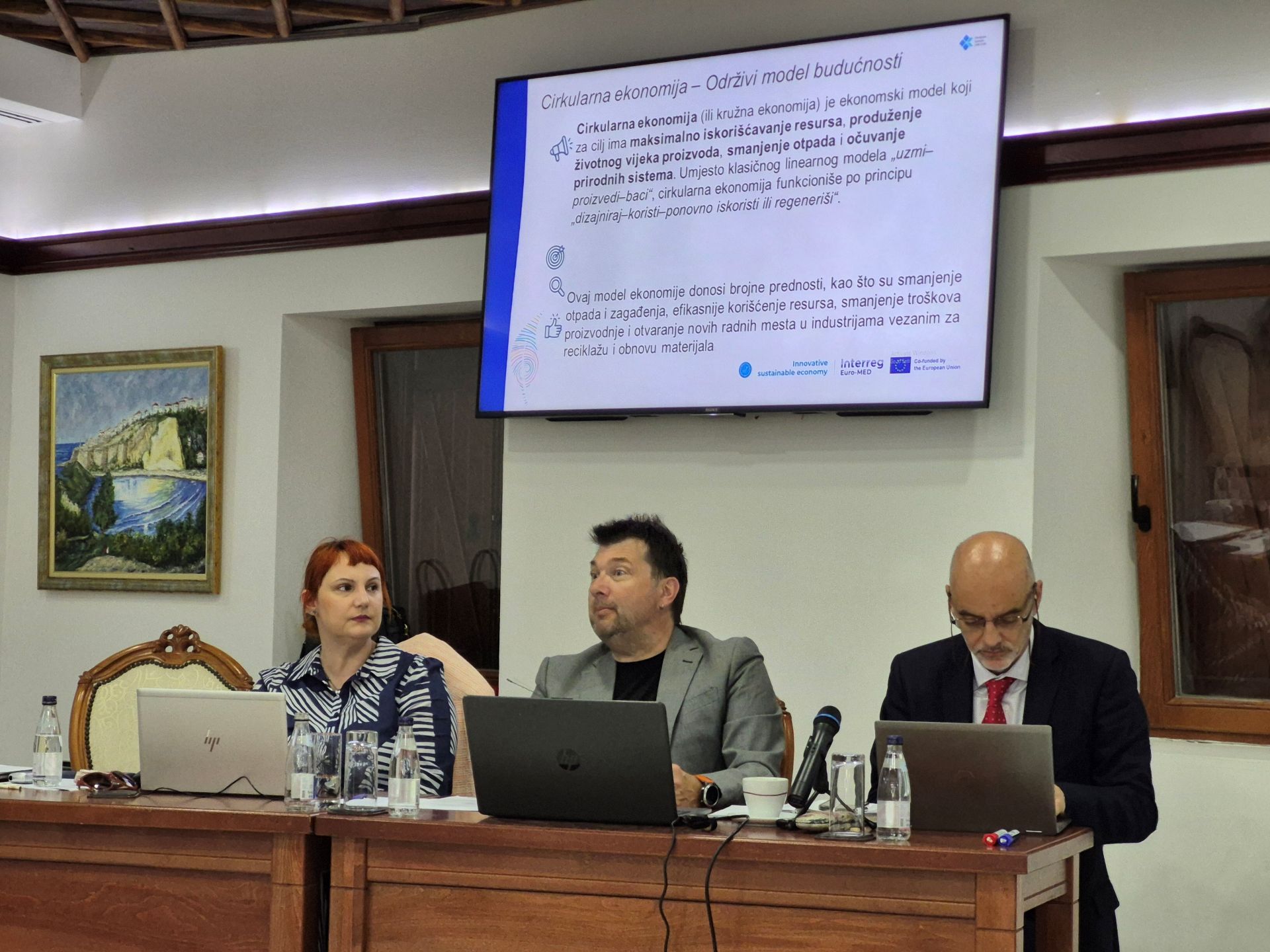
Developing circular aquaculture requires practical knowledge of production systems, business opportunities and the regulatory conditions governing their implementation. These connections were the focus of the second LiRRIE workshop, held on May 13, 2025, in Ulcinj, Montenegro, within the AZA4ICE project.
Organised by the Chamber of Economy of Montenegro in cooperation with project experts, the event brought together public authorities, businesses, researchers, civil society and local stakeholders. It supported preparations for the joint development of an Action Plan for the Šasko Lake pilot area.
As an Expert in Living Responsible Research and Innovation Ecosystems (LiRRIEs) and Inclusive Circular Economy, I delivered two training sessions, demonstrated the BLUEfasma assessment tool and moderated the concluding stakeholder discussion.
Connecting circular economy principles with business practice
In my first training session, Circular Economy in Aquaculture, I introduced approaches to reducing waste, improving resource efficiency and retaining value within production systems. Examples from the BLUEfasma Knowledge Base helped illustrate these principles, including their relevance to integrated multi-trophic aquaculture (IMTA) and recirculating aquaculture systems (RAS).
My second session focused on business transformation towards circular practices. I explored how small businesses and entrepreneurs could identify opportunities for cost savings, resource reuse and cooperation across value chains. I also introduced blue growth clusters and digital marketplaces as mechanisms that can support business connections and market access.
Understanding the regulatory context
Nikol Ulama, representing the Ministry of Agriculture, Forestry and Water Management, presented Montenegro’s aquaculture regulatory framework, licensing procedures, environmental requirements and administrative barriers.
This provided an important context for the training: stakeholders need to understand how proposed innovations fit within permitting processes and institutional responsibilities.
Dr Danilo Mrdak complemented the regulatory discussion with a conceptual circular aquaculture model for Šasko Lake, helping participants consider the feasibility of proposed approaches in local conditions.
Supporting assessment and stakeholder dialogue
I demonstrated the BLUEfasma circularity self-assessment tool, guiding participants through its use to identify gaps and opportunities in their organisations’ practices.
In the group reflection session I moderated, participants discussed regulatory application, coordination among institutions and the support needed to move towards implementation. Their feedback highlighted demand for deeper technical guidance, practical demonstrations and continued involvement of local fishers.
These inputs helped identify topics for subsequent LiRRIE activities and Action Plan development. My contribution focused on making the connections between circular economy concepts, business decisions and regulatory requirements clear enough for stakeholders to assess their practical options.
Photo: Workshop chairs, from left: Marija Milačić, Dr Danilo Mrdak and Dr Radoje Laušević. Second LiRRIE event, Ulcinj, Montenegro, May 13, 2025